Aviation, Airports & FBOs
Moving Cargo and Baggage at Airports Since 1981
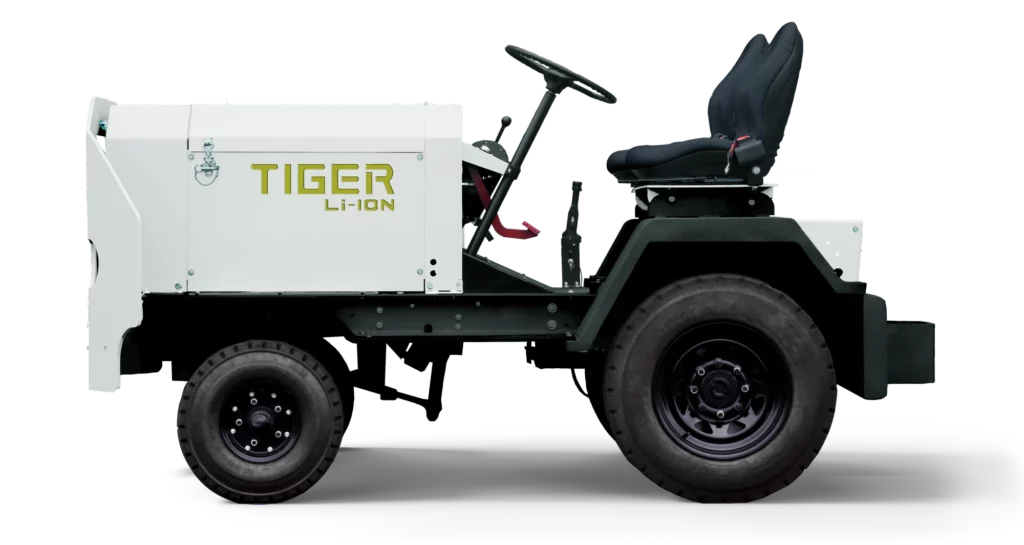
Tiger tow tractors have been trusted by the world’s largest cargo handlers and baggage operations to powered ramp operations since 1981. That proven legacy now comes with a modern lineup of powertrain options: lithium-ion electric, gasoline, LPG and export diesel, so your operation can run tractors that fit your infrastructure, environment and region.
Built on a robust 100% steel body-on-frame chassis, Tiger delivers a 60,000-lb. tow rating engineered for around-the-clock ramp demands. The familiar form factor means your ground crews already know how to operate it and your maintenance team already knows how to service it.
Behind the equipment is Waev, a team dedicated to being the best partner in aviation ground support — bringing the industry knowledge, responsiveness and long-term commitment that airline, cargo, FBO and MRO operations deserve.

ELECTRIC RAMP GSE TOWING
Move Cargo Loaders, GPUs, Baggage Trains and Heavy Ramp Equipment
On the airline ramp, every minute between turns counts. The Tiger Li-Ion tows loaded cargo trains, GPU strings, baggage dollies between aircraft and terminal, and repositions deicers and boarding stairs for the next departure. Where combustion equipment means exhaust exposure for gate agents, cabin crews and ramp workers operating at close range, the Tiger Li-Ion keeps the gate area clean. Programmable speed controls let ramp supervisors set zone-specific limits. Anti-rollover technology reduces tip risk on wet surfaces and inclined ramp areas. Opportunity charging between turns keeps units in service across multi-shift operations without removing them from the rotation.
GAS, LPG & EXPORT DIESEL GSE TOWING
Proven Kubota Power for FBOs, Cargo Ramps and Remote Locations
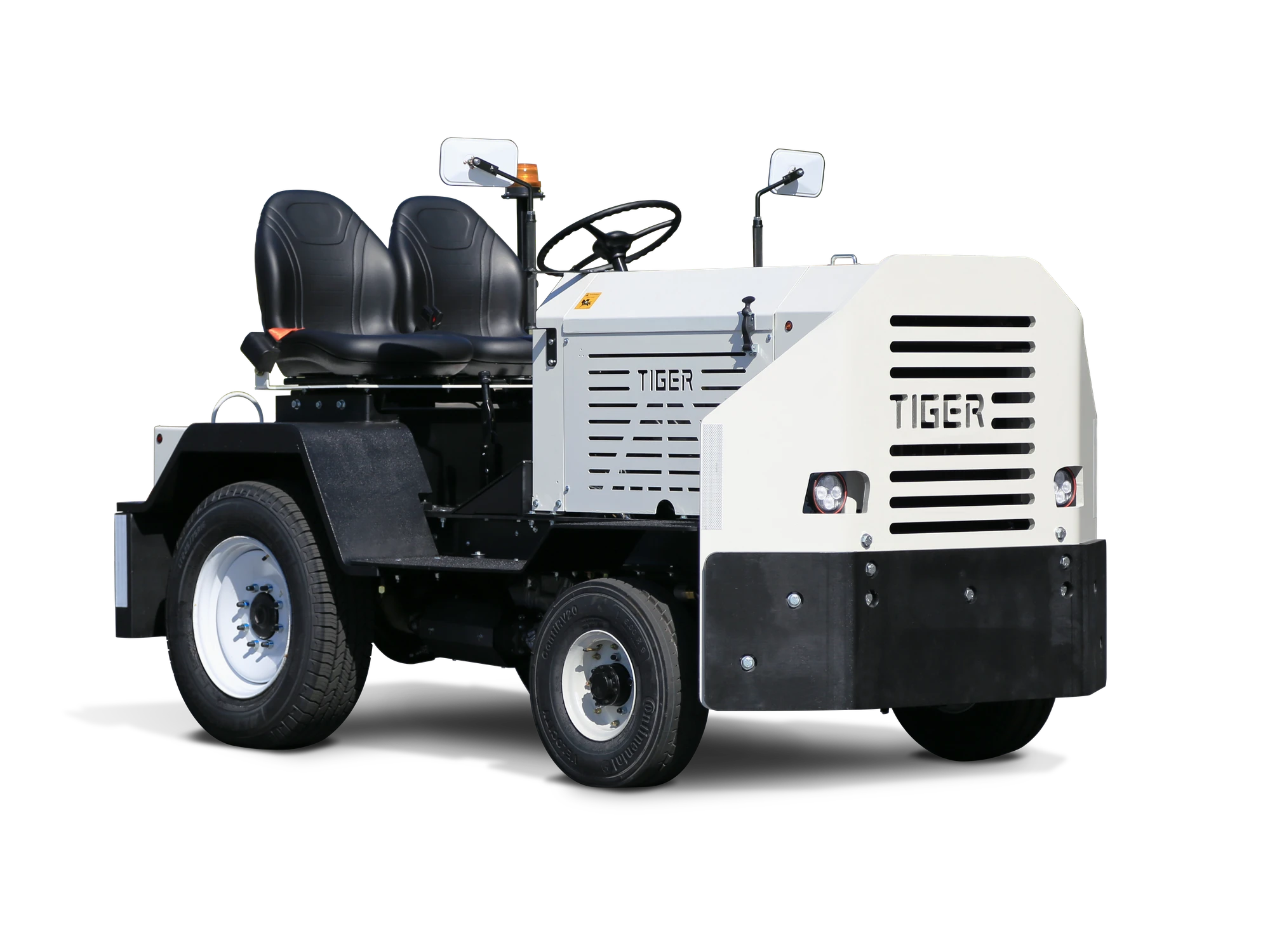
FBOs, cargo carriers and remote ramp operations often run on LPG or gasoline infrastructure that predates electric GSE. Meanwhile, installing shore power across an open ramp carries cost and complexity. Tiger Gas delivers the same 60,000-lb. tow capacity as the Li-Ion, running on the Kubota-powered drivetrain that aviation ground crews are familiar with. It tows the same cargo loader trains, GPU strings and heavy ramp equipment the Li-Ion handles without requiring a single new charging outlet. When the operation is ready to electrify, Tiger Gas converts to lithium-ion via the Tiger Repower Kit — same chassis, no crew retraining. Both models accept the same hitch attachments and GSE tow bar configurations.
Tiger Tow Tractors Work in Aviation Ground Operations
From commercial airline gates to remote FBO pads — six ramp applications where Tiger earns its keep.
Commercial Airlines
Moving cargo loaders between holds, towing GPU and PCA unit strings to gates and pulling baggage dolly trains to carousels. Tiger repositions heavy ramp equipment between every flight cycle. Tiger’s 60,000-lb. tow rating covers the full range of airline GSE on tight turn schedules.
Regional & General Aviation
Compact ramps, mixed GSE fleets and lean maintenance staff make Tiger’s simple, serviceable design a natural fit. Common industry parts and no proprietary sourcing keep regional operations running.
Cargo Carriers & Freight Ramps
Towing cargo loader trains to wide-body holds, moving containers to sorting facilities and repositioning freight equipment between flights. In high-cycle operations, Tiger’s low maintenance overhead directly protects throughput.
FBOs & Business Aviation
Moving fuel trucks, GPU carts, ground equipment and maintenance stands for corporate and charter operations. Tiger Li-Ion’s zero exhaust is especially valued inside FBO hangars. Tiger Gas supports remote ramp pads where shore power is unavailable.
MRO Facilities
Towing maintenance equipment trains, moving tooling carts between bays and repositioning GSE during heavy check cycles. Tiger’s programmable speed controls support the precise, low-speed movement that MRO work requires inside maintenance hangars.
Airport Maintenance & Facilities
Towing airfield maintenance equipment, moving mowing and snow removal trains and supporting pavement and lighting operations. Tiger hauls heavy materials across active airport campuses where equipment access is controlled.
SUSTAINABILITY
Zero Emissions at the Gate. Verifiable Progress Against Airport Mandates.
Tiger Li-Ion eliminates 17 metric tons of CO2 per unit, per year.
Tiger Li-Ion delivers measurable results from day one whether the driver is FAA environmental standards, VALE program eligibility or airport authority emissions mandates. Each ICE unit eliminated reduces CO2 by 17 metric tons annually. That’s the equivalent of removing more than three passenger vehicles from the road. For phased transitions, Tiger Gas offers the same tow capacity with a direct Li-Ion conversion path as mandates expand.”

Airport Tow Tractor FAQ
Common questions from airport operators, FBO managers and fleet procurement teams evaluating Tiger tow tractors for aviation applications.
Have a question not answered here? Contact our Waev GSE specialists who support the full lineup of aviation vehicles from Tiger, Taylor-Dunn, GEM and Fusion.
What does a Tiger tow tractor move at an airport?
Tiger tow tractors move heavy non-powered ground support equipment on the airport ramp and in terminal areas. Common applications include towing cargo loader trains, pulling GPU strings to gates, moving baggage dolly trains to terminal carousels and repositioning deicers, air start units and boarding stairs between flights. However, Tiger is not an aircraft pushback tractor. Pushback requires a specialized high drawbar-pull tractor certified specifically for that purpose. Ultimately, Tiger’s role is towing the GSE that supports each flight cycle, not the aircraft itself.
What is the tow capacity of the Tiger tow tractor?
Both the Tiger Li-Ion and Tiger Gas are rated to 60,000 lbs. of hitch towing capacity. This covers the full weight range of heavy ground support equipment found on commercial airline, cargo and FBO ramps including loaded cargo loader trains, multi-unit GPU strings, baggage dolly trains and heavy maintenance equipment. However, actual towing performance varies by surface grade, hitch and tow bar configuration and load type.
How does the Tiger Li-Ion compare to the Tiger Gas for airport use?
The Tiger Li-Ion and Tiger Gas share the same 100% steel chassis, the same operator controls and the same 60,000-lb. tow rating. The Li-Ion runs on a 96V lithium iron phosphate battery which delivers zero tailpipe emissions inside hangars and gate areas, 78% less maintenance than combustion alternatives and a 5-year/5,000-hour battery warranty. It is the preferred choice for airline ramps, cargo terminals and enclosed MRO facilities where emissions controls are in effect. The Tiger Gas runs on a Kubota engine with gas, LPG or export diesel — the right choice for FBOs and remote ramp locations where electrical infrastructure is limited, where existing GSE maintenance programs are built around combustion equipment or operation is limited by available fuel types. Every Tiger Gas unit is designed to convert to Li-Ion without chassis replacement using our Tiger Li-Ion Repower Kit.
Does the Tiger Li-Ion require new charging infrastructure at the airport?
No. The Tiger Li-Ion charges from existing 240V facility outlets using its standard on-board 6.6 kW J1772 charger compatible with NEMA 14-30, 14-50 and 6-50 receptacles. Most airline hangar and FBO facilities already have compatible 240V outlets. A full overnight charge takes six to seven hours. For operations running multiple shifts, Tiger Li-Ion supports DC fast charging through ACT Quantum, Minit Charger and PosiCharge-compatible chargers, reducing charge time to two to three hours. Additionally, opportunity charging between turns (plugging in at the gate during turns or in staging areas between runs) keeps units topped off without removing them from the rotation.
What other Waev vehicles are available for airport operations alongside Tiger?
Tiger handles heavy GSE towing. For the rest of the airport fleet, Waev offers three additional brands: Taylor-Dunn electric utility vehicles for baggage handling, lavatory service, potable water service and ramp maintenance up to 10,000 lbs. of towing; GEM street-legal electric low-speed vehicles for passenger shuttle, security patrol, FBO guest transport and maintenance personnel up to 125 miles of range; and Fusion commercial electric carts for cost-effective passenger and utility cart operations. All four brands are available through the Waev dealer and service network — so airport operators can source and service the complete electric ground fleet from one organization.
Complete Your Waev Airport Fleet
GEM, Tiger, Taylor-Dunn and Fusion — One Company, One Fleet, Zero Tailpipe Emissions.
Tiger handles heavy GSE towing. For passenger transport, ramp service utility and cost-effective cart operations, Waev’s other brands cover every remaining role.
AIRPORT PASSENGER & UTILITY LSVs
GEM Electric Vehicles

GEM handles passenger shuttle, security patrol and personnel movement. It’s street-legal and available with HVAC and ADA-accessible configurations.
RAMP SERVICE & BAGGAGE GSE
Taylor-Dunn Utility Vehicles

Taylor-Dunn handles ramp service utility — baggage handling, lavatory service, potable water and maintenance up to 10,000 lbs.
AIRPORT PASSENGER & UTILITY CARTS
Fusion Commercial Carts

Fusion covers passenger transport up to 8 seats and utility carts with electric hydraulic dump beds.
Keep Your Ramp Moving With Tiger.
Talk to a specialist about configurations, options, pricing and charging plans for your airport, cargo operation or FBO.